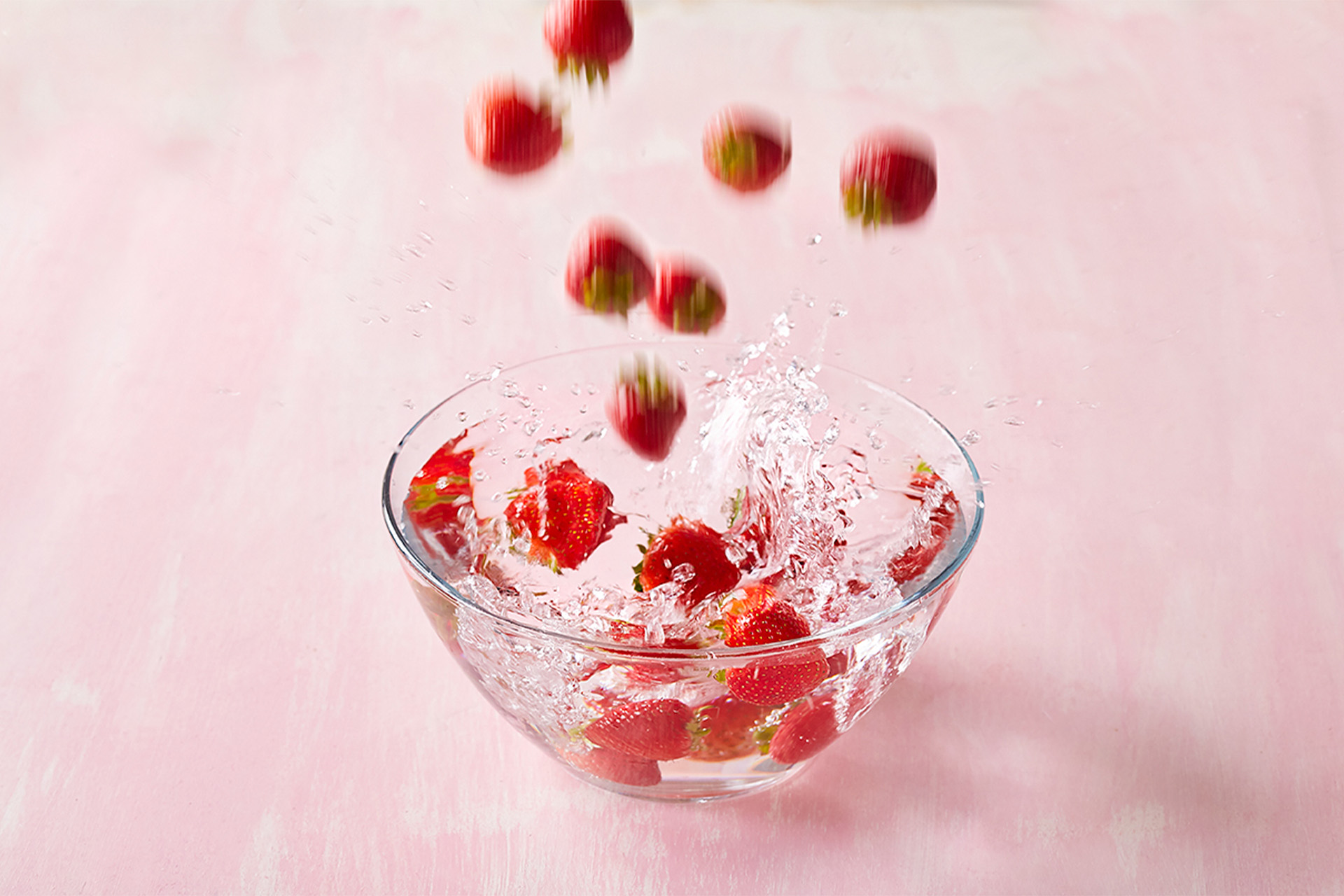
How to Wash Strawberries (Clean, Dry and Store Them Right)
Rinse strawberries under cool running water just before you eat them, then gently pat them dry3 Skip the soap, detergent, vinegar and produce washes. The FDA recommends plain running water for fresh produce.1, 2
Wash strawberries right before eating, not before storing, because extra moisture speeds spoilage .
How to Wash Strawberries, Step by Step
What you need:
A colander, cool running water and a clean cloth or paper towels.
- Keep the caps on. Leave the green caps attached while you rinse.
- With clean hands, rinse under cool running water. Put the berries in a colander and rinse them under cool running water, turning them gently with your hands.3 A quick rinse under running water works better than letting berries sit in a bowl or sink of water.3, 4
- Pat dry. Gently pat the berries dry with a clean cloth or paper towel.1, 3
- Hull or slice. Remove the caps after washing, then slice if you like [W3]. See hulling tips on How to Select, Store & Freeze Strawberries.
- Enjoy your delicious, healthy strawberries!
Common Questions
Can you wash strawberries with soap?
No. The FDA doesn’t recommend washing fruits and vegetables with soap, detergent or commercial produce wash [W1]. Produce is porous, so soap can be absorbed and is hard to rinse off [PFAQ][W4]. Plain running water is all you need [W2].
Should you wash strawberries with the caps on?
Yes. Rinse with the caps on, then hull after washing [W3].
How long do washed strawberries last in the refrigerator?
For the longest freshness, keep strawberries unwashed in the refrigerator and rinse them just before eating [W3]. If preparing ahead, it’s ok to refrigerate for a couple hours before serving.
Should you wash strawberries before freezing them?
Yes. Rinse, gently pat dry and remove the caps. Freeze in a single layer on a lined baking sheet, then move the berries to a freezer bag or container [FAQ][W3]. See the freezing steps on How to Select, Store & Freeze Strawberries.
Should you wash strawberries before storing them?
No. Wash strawberries just before eating, not before storing them, because extra moisture speeds spoilage.3 Until then, keep them unwashed in the refrigerator, in their original clamshell or in an airtight container lined with a paper towel.
California strawberries are packed into clamshells right in the field and cooled quickly. No other processing or washing takes place before they reach the store. That’s why the rinse happens at home, just before eating.
Can I wash strawberries ahead for lunchboxes or meal prep?
Yes. Wash them as recommended, and then dry the berries well, store them in a paper-towel-lined airtight container in the refrigerator if possible, and eat them within 6-8 hours.
For full storage tips, see How to Select, Store & Freeze Strawberries.
Do you need vinegar or baking soda to wash strawberries?
Should I use salt water to wash strawberries?
Soaking strawberries in salt water isn’t recommended, because it may make the fruit taste bad or spoil faster.
Does washing remove pesticides from strawberries?
Rinsing under running water can help remove dirt and any residues that may be present. Government testing finds pesticide residues on produce well below EPA safety limits. Rinsing under running water is the FDA’s standard advice for all fresh produce, and strawberries are no exception.1 For the testing data and how safety limits are set, see Pesticides and PFAS on Strawberries.
Washing and Food Safety: Mold, Bugs and Germs
Rinsing produce just before eating, with clean hands and clean tools, is part of the FDA’s everyday produce safety advice.1 If one berry in a package is moldy, throw it out along with any berries touching it, then check the rest. USDA advises discarding moldy soft fruit because mold can reach below the surface, and it notes that “mold spreads quickly in fruits and vegetables”.5
Strawberries are grown outdoors and hand-packed in the field, so an occasional bug may find its way into a package. The FDA allows for small natural defects such as these in food because it is “economically impractical” to grow produce that’s completely free of them, and it sets its limits for these defects at levels that “pose no inherent hazard to health”. If you find a bug, simply throw the affected berry out, and enjoy the rest.6
Use clean cutting boards, countertops, knives and colanders. To learn how safety is built into growing and harvesting, see Grown for Our Families & Yours.
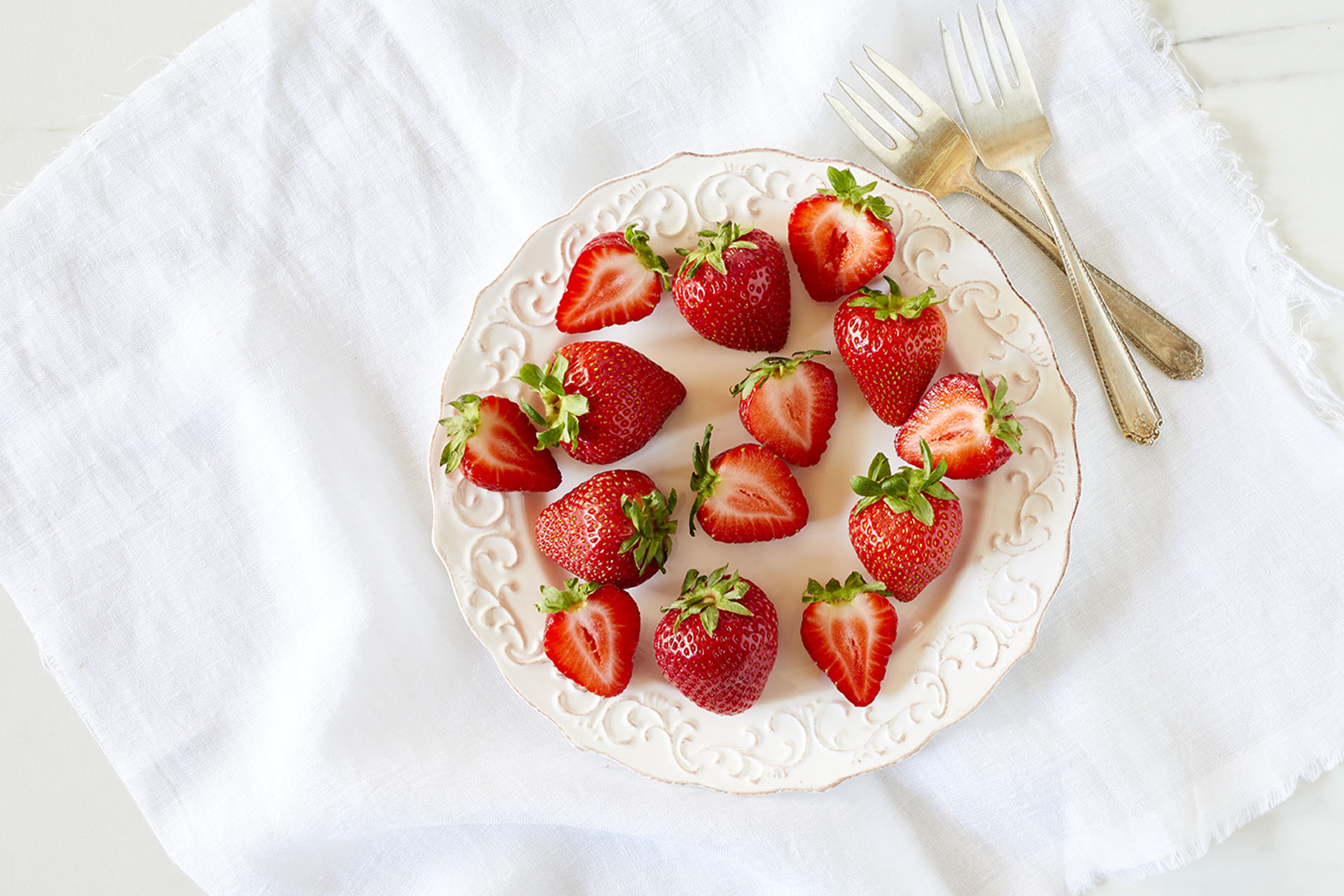
Sources
- U.S. FDA, Raw Produce: Selecting and Serving It Safely (July 2023) — https://fda.gov/media/77178/download
- U.S. FDA, “7 Tips for Cleaning Fruits, Vegetables” (content current as of June 15, 2021) — https://www.fda.gov/consumers/consumer-updates/7-tips-cleaning-fruits-vegetables
- Harris, L.J., and Mitcham, E. Strawberries: Safe Methods to Store, Preserve, and Enjoy. UC ANR Publication 8256 (2007) — https://escholarship.org/uc/item/5pw3p4tq
- National Pesticide Information Center (Oregon State University and U.S. EPA), “Washing Fruits and Vegetables” — https://www.npic.orst.edu/capro/fruitwash.html
- USDA Food Safety and Inspection Service, Molds on Food: Are They Dangerous? (rev. Aug 2013) — https://www.fsis.usda.gov/sites/default/files/media_file/2021-02/Molds_on_Food.pdf
- U.S. FDA, Food Defect Levels Handbook (content current as of Sept 7, 2018) — https://www.fda.gov/food/guidance-documents-regulatory-information-topic/defect-levels-handbook
- NPR Illinois, on rinsing and soaking produce to reduce pesticide residues (Aug 24, 2026). Reference only, not cited on the page — https://www.nprillinois.org/2026-08-24/pesticide-fruit-veggies-rinsing-soaking